


Black Rhino(rhinoceros), a critically endangered megaherbivore, faces a relentless battle for survival across its African range. Once numerous, its population was decimated by up to 98 per cent between 1960 and 1995. Today, concerted global efforts are working to recover its numbers, but the threat remains acute. This article examines the seven primary threats driving the poaching crisis and outlines the essential solutions currently being deployed by conservation bodies and governments.
Understanding the fate of this magnificent animal requires us to first understand its unique characteristics and the historic reasons it has become a target.
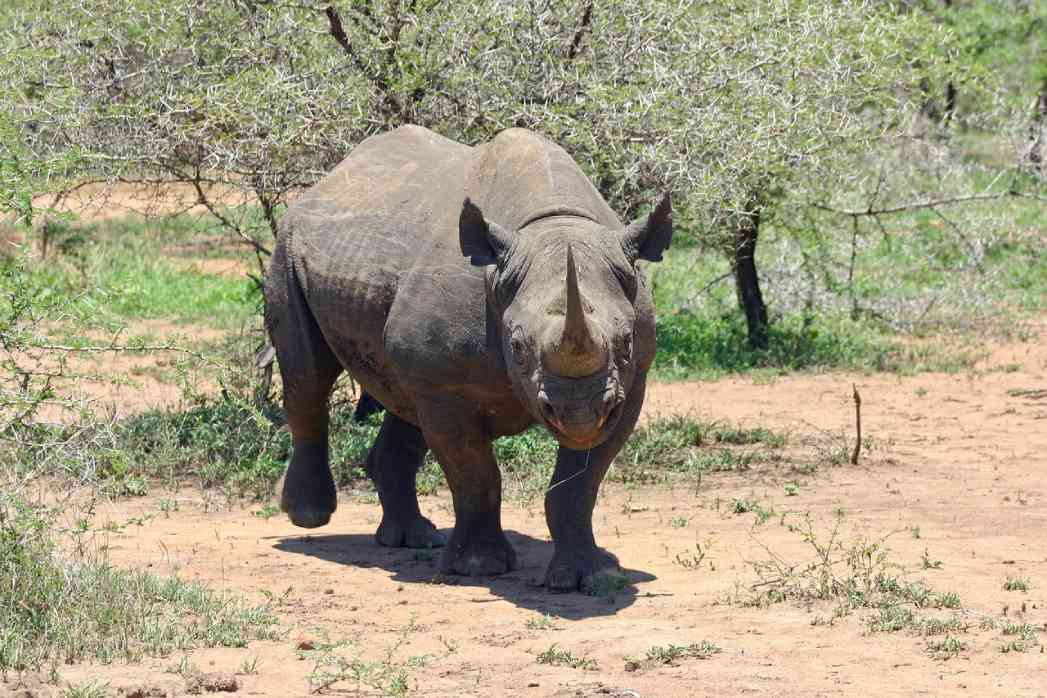
Why the Name and Where They Live
Despite their common name, Black Rhinos are not actually black. Both the black and white rhino species are naturally a shade of grey, often appearing brown or reddish depending on the mud they wallow in. The name is widely believed to have originated from a mistranslation. When early Dutch settlers described the White Rhino as having a wijde (wide) lip for grazing grass, English speakers misunderstood it as “white,” and subsequently dubbed the other species “black” to distinguish it.
Black Rhinos are typically solitary browsers, meaning they use their distinctive pointed, prehensile (hooked) lip to grasp and strip leaves from shrubs and trees. They are found in protected pockets across eastern and southern Africa. Examples of parks that have been vital to their conservation include Kenya’s Nairobi National Park, Ol Pejeta Conservancy, and Tsavo West’s Ngulia Rhino Sanctuary, as well as Etosha National Park in Namibia and Hluhluwe iMfolozi Park in South Africa.
Core Reasons They Are Endangered
The foremost reason why they are endangered is the relentless poaching driven by the illegal wildlife trade. Rhino horn is falsely believed in some Asian cultures, particularly in Vietnam and China, to possess medicinal properties or to act as a status symbol to display wealth and success. This demand creates a lucrative black market where rhino horn can fetch prices higher than gold.
Another compounding factor is habitat loss and fragmentation. As human populations expand and land is converted for agriculture, rhinos are confined to smaller, isolated protected areas. These fragmented populations suffer from reduced genetic diversity and increased susceptibility to disease, making their recovery inherently slower and more complicated even without the threat of poaching.
Threat 1: Poaching for Horn
Poaching remains the deadliest and most immediate threat to the Black Rhino. Poachers operate with increasing sophistication, often using helicopters, night vision, and veterinary drugs to tranquilise and kill the animals before quickly removing the horns with chainsaws or axes. This crime is efficient, brutal, and often difficult to detect in vast wilderness areas.
The rhino’s slow reproductive rate makes population recovery extremely difficult when poaching levels are high. Females typically only produce one calf every two to four years. Therefore, every single adult rhino lost to poaching has a devastating, long term impact on the entire species ability to survive and bounce back.
Threat 2: Organised Crime Syndicates
The poaching crisis is not driven by subsistence hunters but by highly sophisticated transnational organised crime syndicates. These criminal networks manage the entire supply chain, from hiring the on the ground poacher to smuggling the horn across continents and finally distributing it to end users in Asia.
The involvement of organised crime means that conservation requires a coordinated international law enforcement effort, far beyond the capabilities of local park rangers alone. Stopping the poaching requires breaking down these complex criminal structures, which demands intelligence sharing between countries and cooperation among multiple police and customs agencies.
Threat 3: High Black Market Value
The massive high black market value of rhino horn acts as the chief motivator for all threats. Because the horn is valued more than its weight in gold, the financial reward outweighs the risk of capture for many desperate individuals and powerful crime bosses. This value is sustained by an artificial market based on cultural belief rather than genuine medical benefit.
The horn’s value dictates the level of risk and resources poachers are willing to deploy. They are equipped with expensive, military grade gear, forcing conservation teams to constantly seek higher technology and better training simply to keep up with the criminals’ financial advantage.
Threat 4: Political Instability and Conflict
In some African range states, political instability and conflict create security vacuums that criminal gangs ruthlessly exploit. Areas affected by war or poor governance often have weakened law enforcement and corruption, making it easier for poaching gangs to operate with impunity.
Conservation efforts in these regions become incredibly difficult and dangerous, often requiring armed intervention and continuous security operations. Protecting rhinos in conflict zones demands not only wildlife management expertise but also humanitarian and security protocols, adding layers of complexity to conservationists tasks.
Threat 5: Habitat Loss and Fragmentation
The continued destruction and segmentation of natural habitats severely undermines conservation success. As large tracts of land are converted to farms or settlements, rhino populations are forced into smaller, isolated reserves. This habitat loss and fragmentation reduces the total number of rhinos the ecosystem can sustain.
Furthermore, fragmented habitats restrict the rhinos ability to move freely to find food, water, and breeding partners. This pressure lowers the rhinos overall health and reproductive success, making them biologically less resilient to poaching or disease outbreaks.
Threat 6: Population Isolation and Inbreeding
When black rhinos are isolated in small protected areas, the resulting population isolation leads to a lack of genetic exchange. Over time, this causes inbreeding, which weakens the population’s gene pool. These rhinos become more susceptible to disease and have lower birth rates, slowing the overall rate of recovery.
To combat this, conservationists must manually intervene through translocation. This involves safely moving rhinos from healthy, high density populations to new, secure areas to introduce fresh genetics. This difficult and costly process is essential for maintaining the species long term health and survival.
Threat 7: Corruption in Wildlife Trade
The final major threat is corruption, which exists at various levels of the wildlife trade chain, from local officials accepting bribes to organised crime groups manipulating customs and judicial processes. This systemic failure allows poachers to evade justice and continue their operations unchecked.
Tackling this requires internal reform within government and law enforcement agencies in range states and consumer markets. Strict enforcement, greater transparency, and harsh penalties are required to ensure that the criminals who profit from this deadly trade are held accountable.
Solutions: Collaborative Actions for Survival
To counter these deadly threats, other suggestions and solutions involve a multifaceted approach focused on both protection and demand reduction. On the ground, this means enhanced anti-poaching patrols supported by advanced technology like thermal cameras, drones, and canine units to secure the rhinos’ habitat and deter poachers.
At the international level, solutions focus on demand reduction campaigns in consumer countries to debunk the false medicinal myths and shift cultural perceptions. Simultaneously, proactive biological management through translocation and habitat expansion is vital to ensure genetic health and allow the black rhino population to grow sustainably beyond the critical stage.